

AI Image Generation in 2026: 5 Trends Every Creator Needs to Know
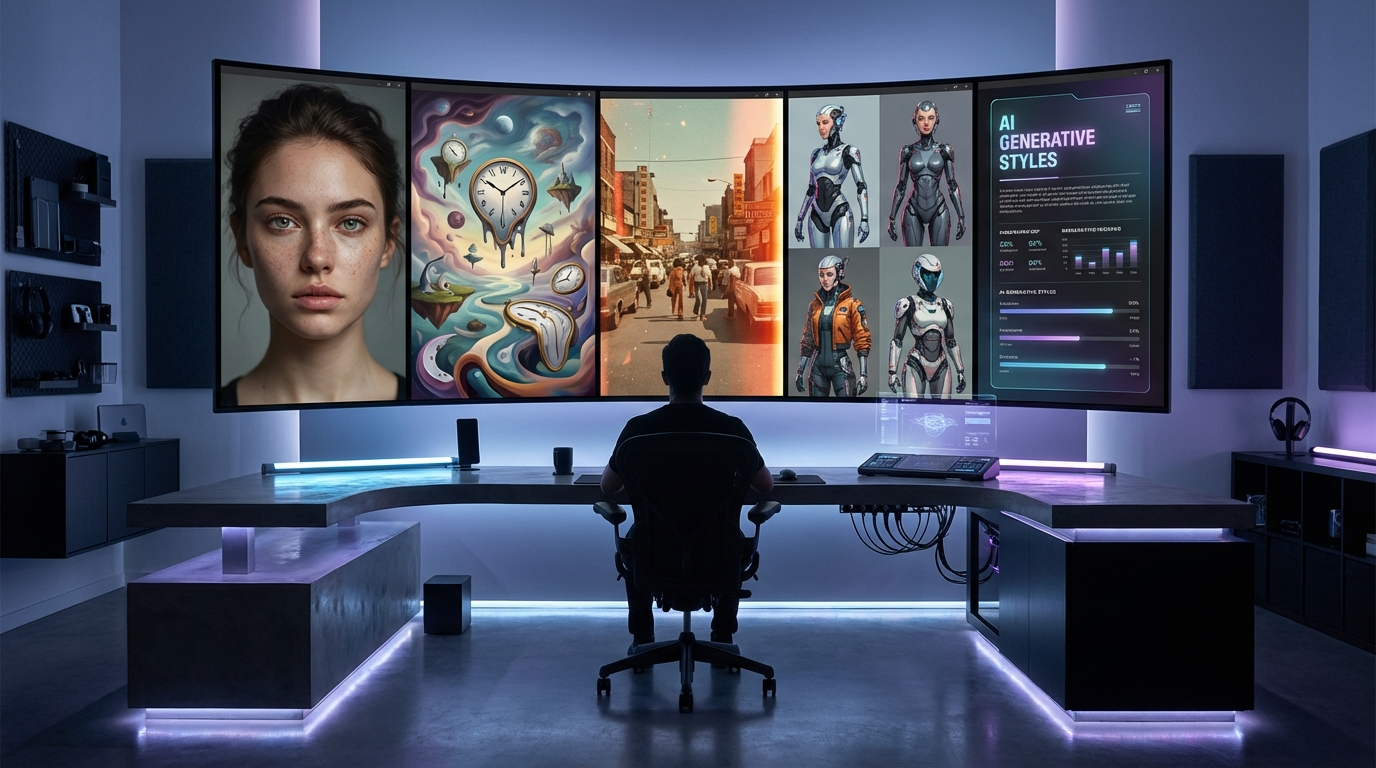
Thirty-four million AI-generated images are created every single day. That number, reported by Forbes, is not a projection — it is the current reality of AI image generation in 2026. And the pace is accelerating.
For creators, marketers, and business owners, this explosion is not a threat. It is an unprecedented opportunity. The AI image generation market is valued at $484 million in 2026 and projected to reach $1.75 billion by 2034. New tools — including Google's recently launched Nano Banana 2 — are making professional-quality image creation accessible to anyone with an internet connection.
But simply having access to AI image tools is no longer enough. The creators who thrive in this landscape are the ones who understand where the technology is heading and position themselves accordingly. Here are the five trends reshaping AI image generation in 2026 — and practical ways to ride each one.
Trend 1: Authenticity Over Perfection
The era of flawless, hyper-polished AI imagery is giving way to something more human. As LTX Studio's trend analysis notes, audiences have developed sharp AI detection instincts — spotting synthetic skin textures, impossible lighting, and overly symmetrical compositions instantly.
The backlash is real. Content that looks "too perfect" now triggers skepticism rather than admiration.
The shift means creators are deliberately introducing imperfections: film grain, natural lighting, candid compositions, and genuine expressions. Images that look like authentic moments captured on a phone outperform pristine studio-style AI generations across engagement metrics.
What this means for you: Stop chasing pixel-perfect outputs. Instead, prompt for natural lighting, slight imperfections, and candid moments. Use photo editing features to refine real photos rather than generating from scratch — the result feels more authentic. Tools like Nano Banana 2 excel here because they combine generation with editing, letting you start from real photos and enhance them rather than creating entirely synthetic images.
Trend 2: Character Consistency at Scale
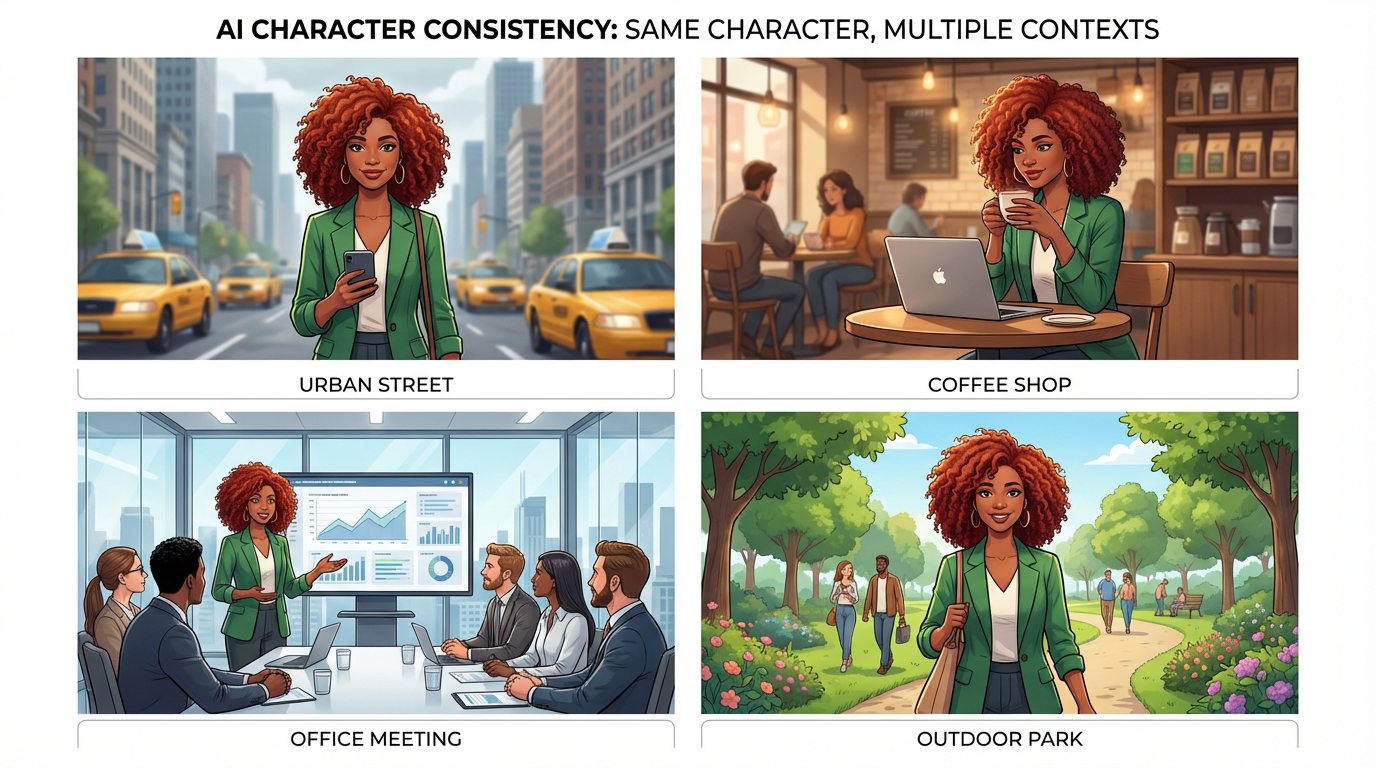
One of the most commercially valuable advances in 2026 is the ability to generate the same character across multiple scenes, angles, and contexts. This capability transforms how brands create visual content.
Consider the traditional workflow: a company needs a brand ambassador appearing in twelve different marketing scenarios. Previously, this required a full photo shoot — hiring a model, booking locations, coordinating a production team. Cost: easily $5,000-$15,000.
Now, a character created once can appear in hundreds of scenarios while maintaining the same facial features, proportions, and visual identity. The AI Journal reports that this kind of consistency is driving businesses toward AI image tools at unprecedented rates.
Nano Banana 2 handles this particularly well because of its multi-image reference capability — you can upload up to 14 reference images, and the model maintains consistency across new generations. For brands building visual identities, this eliminates the biggest pain point of AI imagery: inconsistency.
What this means for you: Build a reference library for your key characters, products, or brand elements. Upload consistent reference photos when generating new content, and the AI maintains visual coherence across your entire campaign.
Trend 3: Text and Data Visualization Inside Images
The ability to render accurate, readable text within AI-generated images was a major breakthrough in late 2025 — and in 2026, it is reshaping how businesses create visual content.
Previously, adding text to AI images required a separate step in design software. Now, models can generate infographics, data visualizations, social media graphics with embedded text, and product packaging mockups in a single generation.
What makes this particularly powerful is web-grounded generation. As WIRED's hands-on review demonstrated, Nano Banana 2 can pull real-time data from the web and embed it directly into generated images — creating weather infographics, market charts, or event posters with live data rather than placeholder text.
This capability collapses what was previously a three-step workflow (research data, design layout, add text) into a single prompt. For small businesses and solo creators who cannot afford dedicated design teams, this is transformative.
What this means for you: Experiment with prompts that include specific text, data points, or information you want embedded in the image. Start with simple use cases — event announcements, product specs, or social media quote cards — and build from there.
Trend 4: The Rise of Multi-Model Workflows
Two years ago, most creators picked one AI image tool and committed to it. That approach is becoming obsolete.
As the AI Journal's analysis explains, the number of competitive image generation models has roughly tripled since 2024. Each model now specializes: Flux leads in photorealism, ChatGPT dominates complex scene composition, and Nano Banana 2 combines generation speed with powerful editing capabilities — all for free through the Gemini app.
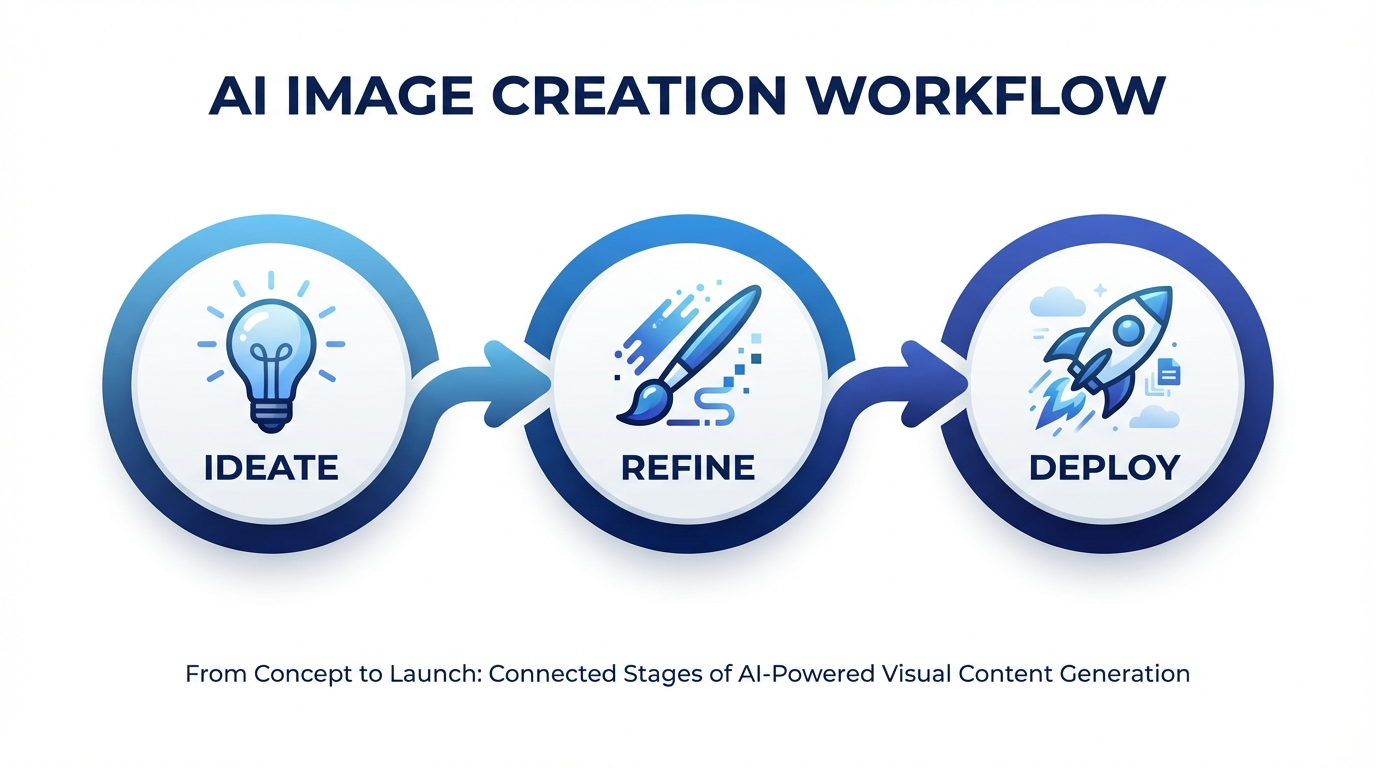
The smartest creators in 2026 are building multi-model workflows. They use fast models for initial concept exploration, specialized models for final polish, and editing-capable models for refinement. The question is no longer "which tool is best?" but rather "which tool is best for this specific task?"
Third-party platforms that aggregate multiple models — are gaining traction precisely because they let users access different AI image models through a single interface. Rather than managing separate subscriptions and learning separate interfaces, creators can match the right model to the right task from one place.
What this means for you: Stop looking for one perfect tool. Instead, build a workflow that uses different models for different stages — fast generation for brainstorming, specialized models for final assets, and editing models for refinement.
Trend 5: Free-Tier Democratization
Perhaps the most significant shift in 2026 is economic. The best AI image generation tools are becoming free.
Nano Banana 2 — which represents Google's latest and most capable image model — is available at no cost through the Gemini app. This is not a stripped-down demo. It includes full-resolution output, text rendering, web-grounded generation, multi-image reference, and photo editing capabilities.
According to Statista, the generative AI market is projected to reach $91.57 billion in 2026. A significant driver of this growth is the freemium model: companies offer powerful free tiers to build ecosystems, then monetize through API access, premium features, and enterprise solutions.
For individual creators and small businesses, this means the cost barrier to professional visual content has effectively disappeared. The playing field between a solo freelancer and a large agency is more level than ever before.
This trend is also fueling the growth of platforms like Apple Banana, which provide free access to multiple AI image models including Nano Banana. For creators who want to experiment with different models without committing to paid subscriptions, these aggregator platforms offer a practical entry point.
What this means for you: Take advantage of free tiers now. Test multiple tools, build your prompting skills, and develop a visual style — all without financial risk. The creators who invest time learning these tools today will have a significant advantage as AI-generated visual content becomes the standard, not the exception.
Putting It All Together: Your 2026 Visual Strategy
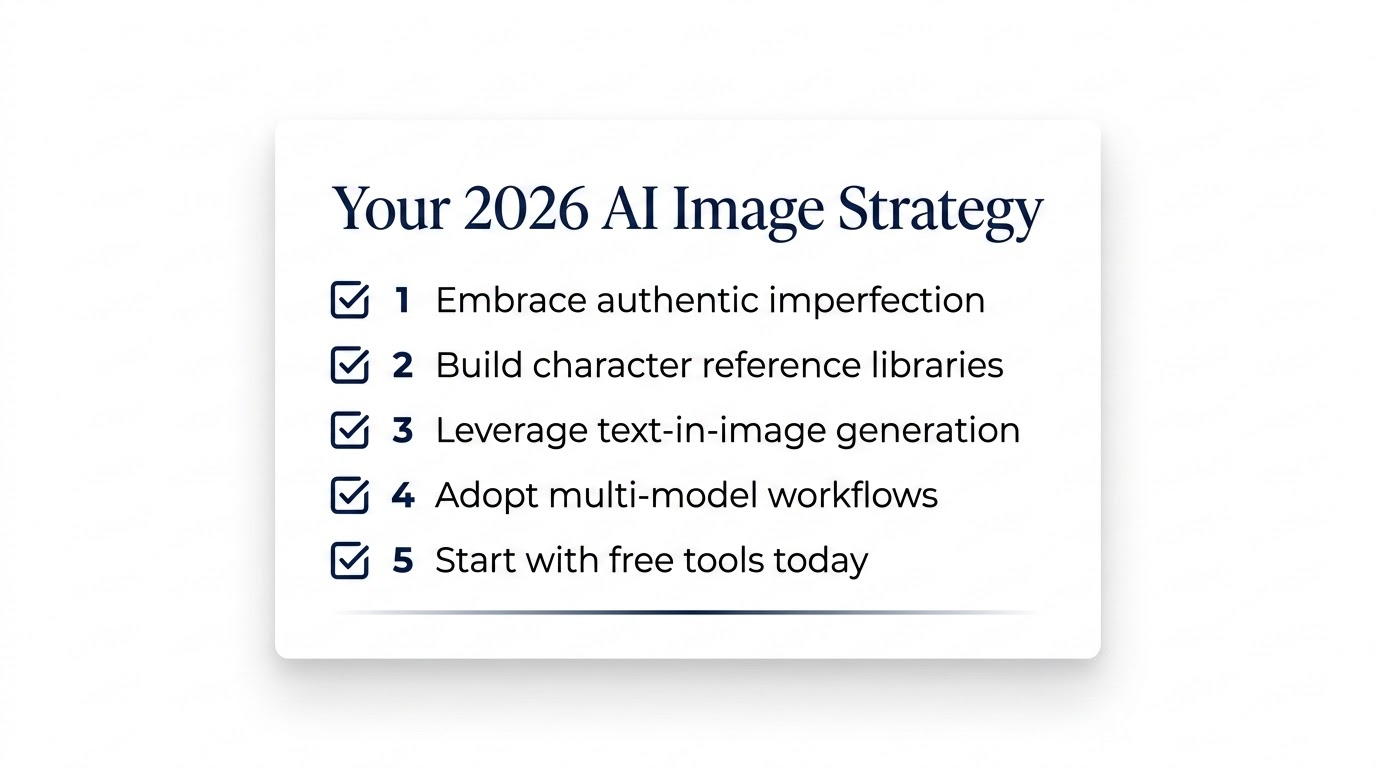
These five trends are not isolated shifts — they are interconnected forces reshaping the entire visual content landscape. Authenticity demands new creative approaches. Character consistency enables brand building at scale. Text integration collapses multi-step workflows. Multi-model access provides flexibility. And free tiers remove the last barrier to entry.
Here is a practical starting point:
- Audit your current visual workflow. Where are the bottlenecks? Which steps could AI accelerate?
- Start with one trend. If you are in e-commerce, character consistency and text integration likely offer the fastest ROI. If you create social content, authenticity and free-tier access are your starting points.
- Build a reference library. Collect examples of visual styles you admire, product photos you want to maintain consistency with, and brand elements that need to stay coherent.
- Test multiple models. Spend a week generating the same prompts across different tools. You will quickly discover which models suit your specific needs.
- Measure results. Track engagement on AI-assisted content versus your previous approach. The data will guide your next steps.
The gap between knowing these trends exist and actually leveraging them is shrinking every day. The tools are free. The learning curve is manageable. And the creators who start now — while many competitors are still debating whether AI image generation is "ready" — will be the ones setting visual standards for the next several years.
AI image generation in 2026 is not replacing human creativity. It is amplifying it — giving every creator access to capabilities that were previously reserved for teams with six-figure production budgets. The question is no longer whether to adopt these tools. It is how quickly you can integrate them into the way you already work.
Statistics cited from Forbes, Fortune Business Insights, and Statista. Market data reflects projections as of March 2026. Tool capabilities and pricing may evolve as platforms update.